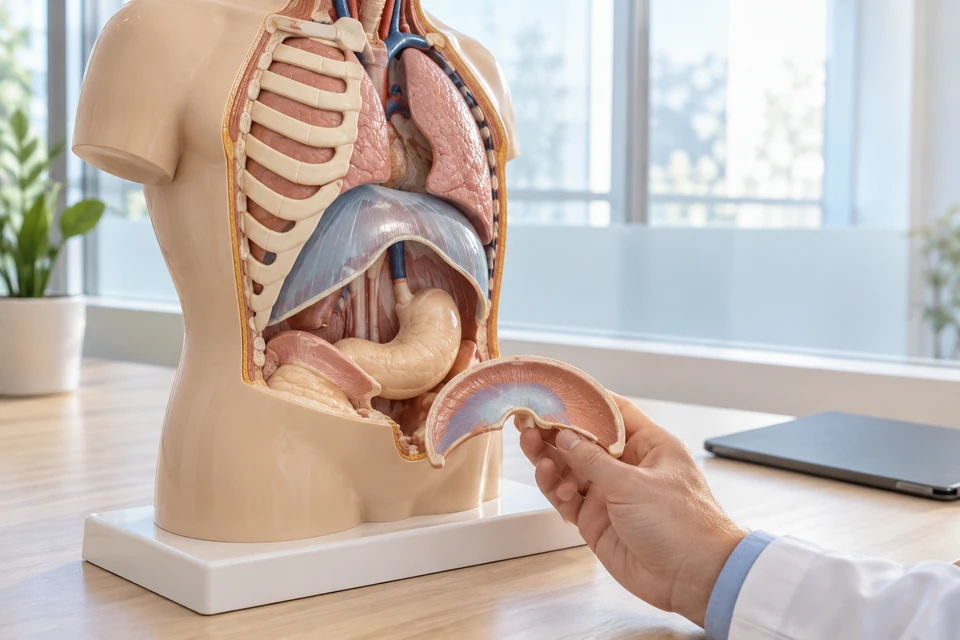
How does it differ from a hiatal hernia?
A hiatal hernia involves the normal opening for the oesophagus. Other diaphragmatic hernias may arise from a congenital defect or a traumatic tear. Some are discovered incidentally in adulthood; others appear after an injury. The defect’s location, cause and contents matter more than the general label of hernia.
Symptoms and diagnosis
Possible symptoms include breathlessness, chest or abdominal pain, discomfort after eating and vomiting. The history should include previous trauma and operations. CT usually provides more anatomical detail than a chest X-ray and can identify associated injuries. A small traumatic defect may require further assessment even when initial imaging is inconclusive.
Elective or emergency treatment?
Trapped organs, obstruction, impaired blood supply or respiratory compromise may require emergency surgery. Traumatic diaphragm injuries are repaired when the person’s condition permits, alongside management of other injuries. Chronic incidental defects need an individual surgical assessment; the absence of symptoms alone does not establish that observation is safe.
Planning the repair
The organs are returned to the abdomen, their condition is checked and the diaphragm is repaired. Larger defects may need reinforcement. Damaged bowel can require additional treatment. Access through the abdomen or chest, and an open or minimally invasive approach, depend on the injury, adhesions and overall stability.
Alternatives and limits of treatment
Medicines cannot close the defect, although stabilisation and treatment of other conditions may take priority. If observation is being considered, its rationale, monitoring and emergency instructions should be explicit. Congenital defects, old hernias and fresh traumatic tears are different situations and should not be managed through a single blanket rule.
Risks and preparation
Risks include bleeding, infection, lung complications, clots, injury to nearby organs and recurrence. Compromised organs make treatment more complex. Elective preparation reviews heart and lung health, nutrition and medicines. Emergency preparation may occur alongside treatment, with discussion of possible additional procedures or intensive care when circumstances allow.
Recovery and follow-up
Recovery depends on lung function and any associated organ injury as well as the repair itself. Pain control, breathing exercises and mobilisation are important. Eating is adjusted if the stomach or bowel also required treatment. Follow-up reviews breathing, food tolerance and wounds, with imaging when indicated.
Urgent warning signs
Sudden breathlessness, severe chest or abdominal pain, persistent vomiting, marked abdominal swelling, fainting or rapid deterioration requires emergency care. After an operation, fever with increasing pain or difficulty breathing also needs urgent assessment. A known hernia should not prevent consideration of other cardiac, lung or abdominal emergencies.
This information is general. The cause of symptoms, appropriate investigations and treatment options are determined through individual assessment.