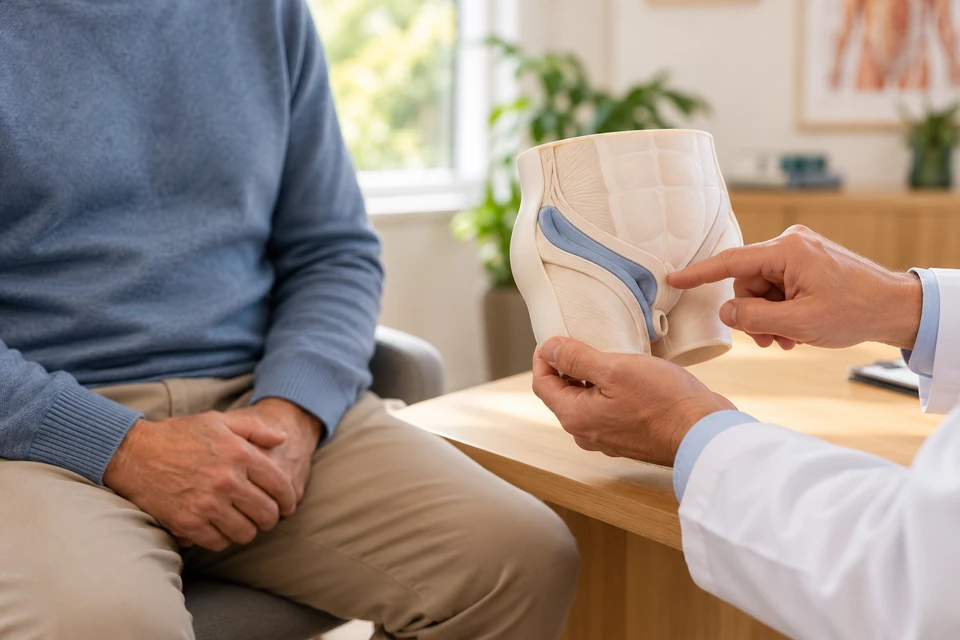
Symptoms and anatomy
An inguinal hernia can cause a groin lump that becomes more apparent with coughing, straining or standing. Discomfort or heaviness may occur, though symptoms can be limited. Reduction when lying down does not mean the defect has closed. The sac may contain fat or bowel. Other groin lumps have different causes, so examination is needed before selecting treatment.
Assessment and individual risks
Examination assesses both groins, symptoms and reducibility. Imaging may help when the diagnosis is unclear. Previous repairs, urinary symptoms, cough and constipation are reviewed. Femoral hernia deserves particular consideration in women. Other illnesses, anticoagulants, activity and work demands influence the anaesthetic and operative plan. The team should also consider whether the hernia actually explains the pain.
When observation may be reasonable
Watchful waiting may suit selected men with absent or minimal symptoms, provided warning signs and reassessment are clear. It is not a universal option, particularly for women or suspected femoral hernia. Increasing pain or functional limitation can change the decision. A support garment may provide temporary comfort but does not repair the defect. Exercise or weight loss should not be presented as closing it.
Open and minimally invasive repair
Open repair uses a groin incision, commonly reinforcing the area with mesh. Minimally invasive TEP or TAPP repairs approach the defect through a different plane. Selected tissue repairs are another option. Recurrence, bilateral disease, previous abdominal surgery, anaesthetic suitability and expertise influence choice. Emergency repair also assesses bowel viability. The recommended approach and mesh decisions should be explained individually.
Risks and persistent groin pain
Risks include bleeding, fluid collection, infection, urinary difficulty and recurrence. Persistent groin pain or numbness deserves specific discussion. Less common injuries may involve nerves, testicular vessels or nearby structures, depending on the operation. Mesh-related infection is another consideration. Pain from a separate cause may persist despite repair, so outcomes include function and comfort as well as disappearance of the bulge.
Preparation and return to activity
Preparation may address smoking, glucose control, cough and constipation. Anticoagulants require a coordinated plan rather than self-discontinuation. Recovery supports pain control and safe movement. Work, driving, lifting and sport depend on symptoms, job demands and the repair. Explain expected wound changes, and reassess persistent pain that limits daily life rather than relying on an identical timetable for everyone.
Incarceration and emergency signs
A suddenly painful, firm, irreducible lump with vomiting, abdominal swelling or inability to pass gas needs emergency assessment. Bowel blood supply may be threatened. Do not force the lump back at home. After surgery, report worsening pain, fever, wound redness or inability to urinate. Chest pain, breathlessness, fainting or heavy bleeding require urgent help, regardless of an earlier observation plan.
This information is general. The cause of symptoms, appropriate investigations and treatment options are determined through individual assessment.