What the operation includes
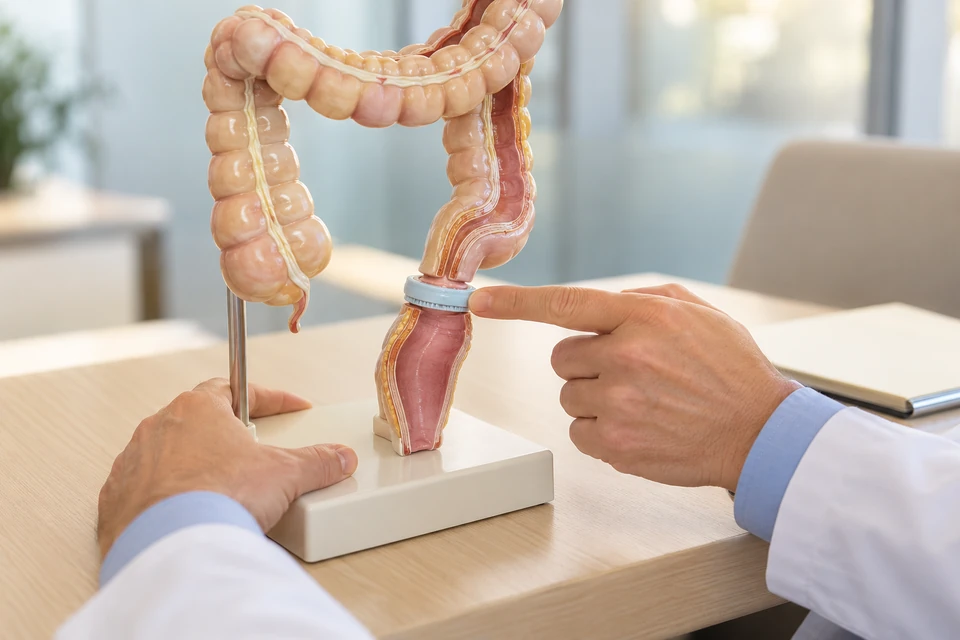
Anterior resection removes part of the rectum, sometimes with adjacent sigmoid colon, and joins the remaining colon to the bowel below. It is commonly used for rectal or rectosigmoid tumours but can have other indications. A low anterior resection creates a lower connection. The name alone does not establish the exact extent, stoma requirement or likely bowel function.
Anatomical and functional assessment
Colonoscopy and biopsy establish the diagnosis, with imaging used to assess extent. For rectal cancer, pelvic MRI helps define relationships to surrounding structures and surgical margins. Previous pelvic surgery or radiotherapy affects planning. Existing constipation, urgency or leakage should be discussed, along with urinary and sexual function. Nutrition and fitness are reviewed because anatomical feasibility does not alone determine the best functional choice.
Alternatives and treatment sequence
For cancer, a multidisciplinary team decides whether additional treatment should precede or follow surgery. Selected early lesions may allow limited treatment, while some cancers cannot safely preserve the anus. Carefully selected complete responders may discuss structured surveillance. Benign disease has different alternatives. Sphincter preservation should be balanced with cancer control and expected quality of life, including a fair discussion of permanent stoma options when relevant.
The connection and protective stoma
After resection, the colon is joined to the remaining rectum or, when appropriate, the anus. Cancer surgery may include mesorectal tissue removal. The surgeon assesses blood supply, tension and integrity of the join. A temporary ileostomy may divert stool from a low connection. It does not eliminate leakage but can reduce its consequences. Access is selected according to disease and operative circumstances.
Low anterior resection syndrome
Reduced rectal storage and altered nerve function can cause frequency, repeated small evacuations, urgency and leakage, collectively called low anterior resection syndrome. Severity varies. Dietary support, medicines, pelvic-floor rehabilitation and selected other measures may help. Symptoms should not automatically receive this label before considering a leak, narrowing, infection or recurrent disease. Urinary and sexual changes also deserve specific assessment and support.
Preparation and follow-up
Preparation supports nutrition, other health conditions, smoking cessation and suitable activity. Possible stoma formation should prompt site marking and education. Follow individual bowel preparation and medication instructions. Recovery monitoring includes mobility, eating, pain and urination. Pathology guides any further oncology treatment. Reversal of a protective stoma needs separate assessment of healing. Follow-up should address everyday bowel function as well as wound recovery.
Signs of complications
Increasing pelvic or abdominal pain, fever, vomiting and marked weakness can indicate leakage or infection. Swelling and failure to pass gas may suggest obstruction. Heavy bleeding, breathlessness, chest pain or new leg swelling can require emergency care. Difficulty passing urine needs prompt advice. With a stoma, monitor dehydration or sudden output loss. A worsening pattern should be reported rather than accepted as normal recovery.
This information is general. The cause of symptoms, appropriate investigations and treatment options are determined through individual assessment.