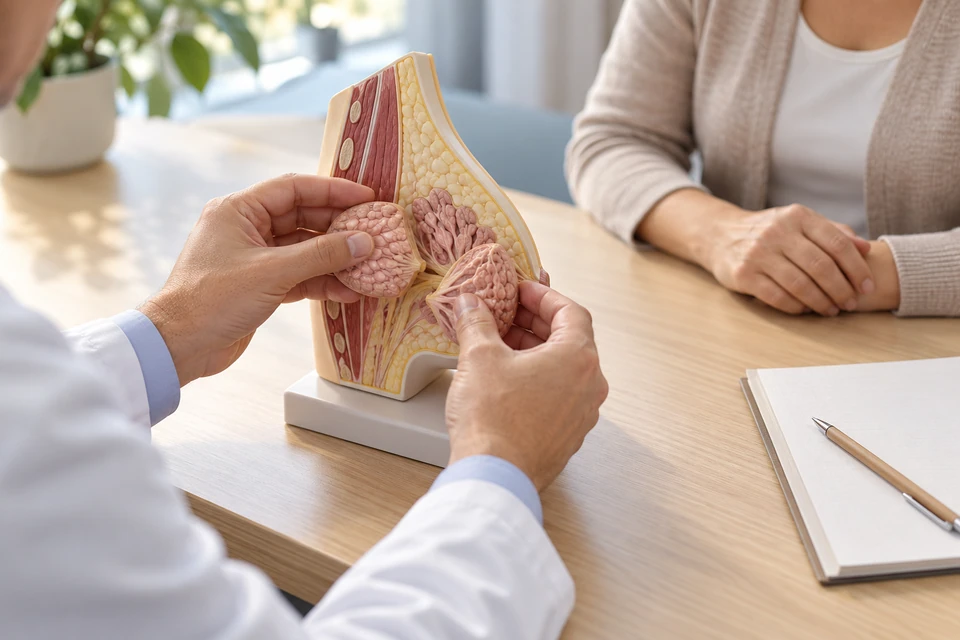
The purpose of an oncoplastic approach
Removing cancer can change breast volume and shape. An oncoplastic approach plans tissue rearrangement or reconstruction alongside removal to reduce these effects. It is not simply cosmetic surgery: margins and cancer treatment remain priorities. Clarify whether the proposed procedure involves reshaping after conservation or reconstruction associated with mastectomy.
Who may benefit from assessment?
Tumour location, the amount of tissue to be removed and breast shape influence suitability. Some defects can be managed by rearranging remaining tissue, while others need different reconstructive options. Oncoplastic surgery is not necessary for everyone. Any benefit must be weighed against additional scars, healing and possible surgery for symmetry.
Why planning should happen before surgery
Imaging, biopsy and selected genetic assessment establish the cancer's extent. Radiotherapy, smoking, diabetes, existing scars and expectations affect technique selection. Tissue movement also matters for subsequent margin assessment and radiation planning, so coordination is important. Discuss likely scars and contour changes without treating another patient's photograph as a promised result.
The main types of technique
Breast-conserving oncoplastic techniques may rearrange remaining tissue or use reduction and lifting principles. Selected patients may need local tissue transfer. Reconstruction after mastectomy offers separate implant- or tissue-based options. Each has distinct indications, and consent should explain the proposed method, alternatives and the possibility of later adjustments.
Cancer treatment remains the priority
Preserving appearance must not mean leaving disease behind. Pathology and margins are assessed as in other cancer operations, and further excision can still be necessary. Tissue rearrangement may affect that planning. Oncoplastic surgery does not remove the need for radiotherapy or systemic treatment, making shared planning between teams essential.
Additional risks and realistic expectations
In addition to bleeding, infection and delayed healing, risks include fat necrosis, impaired tissue circulation, altered sensation and asymmetry. New firmness may later require imaging or biopsy. Additional donor sites create their own care needs. Complications can affect treatment timing, and perfect symmetry or a scar-free result cannot be guaranteed.
Preparation and recovery support
Preparation addresses smoking, nutrition, medical conditions and medicines. Dressing, drain, garment and activity instructions depend on the technique. Arrange appropriate support at home and discuss work requirements beforehand. Appearance evolves during healing, so early swelling should not be taken as the final result or judged against another patient's recovery.
Follow-up and warning signs
Follow-up covers pathology, further cancer treatment, healing, appearance and function. Report rapidly increasing swelling, marked skin colour changes, offensive discharge, fever or worsening pain. Sudden breathlessness or chest pain needs emergency assessment. Keep the operation report available so future breast imaging can be interpreted with knowledge of the reconstruction.
This information is general. The cause of symptoms, appropriate investigations and treatment options are determined through individual assessment.