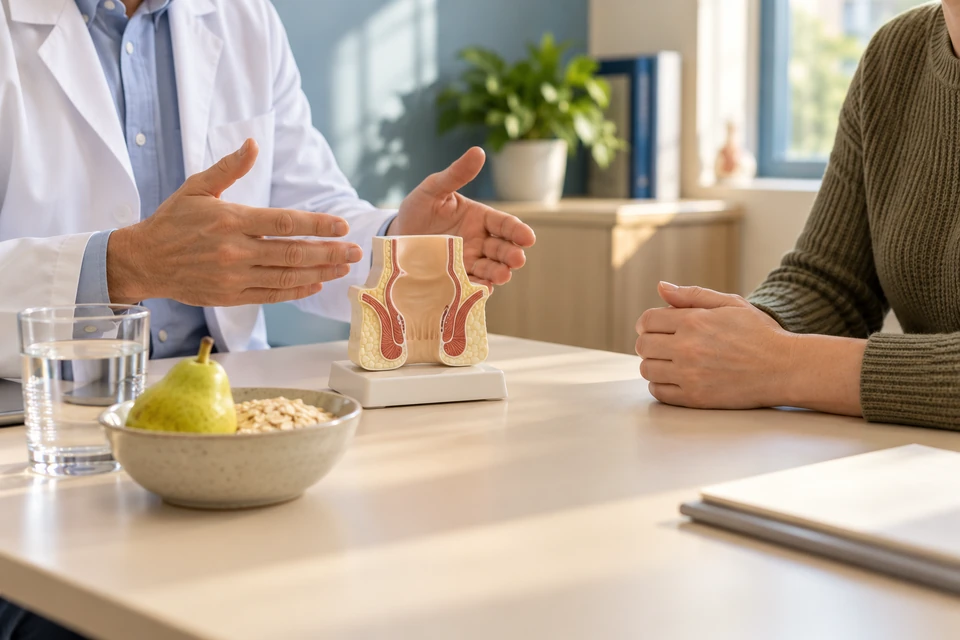
The tear and pain cycle
An anal fissure can cause sharp pain during a bowel movement and burning afterwards, sometimes with a small amount of bright blood. Hard stool or repeated diarrhoea may contribute. Pain, muscle spasm and postponing bowel movements can perpetuate symptoms. A recent tear differs from a chronic fissure. Other conditions, particularly an abscess, can also cause anal pain.
Examination and atypical findings
History and gentle inspection often establish the diagnosis. Severe pain may limit examination and require a different approach. Multiple, unusual or nonhealing fissures can prompt assessment for Crohn's disease, infection or other causes. Persistent bleeding or bowel changes may need further investigation. Previous anal surgery, obstetric injury and leakage matter when considering treatments that reduce sphincter pressure.
Initial treatment
Treatment aims for soft, formed stool through individually adjusted fibre, fluids and sometimes stool-softening medication. Warm-water comfort measures and gentle cleansing may help. Avoid prolonged straining and postponing defaecation. Prescribed topical muscle relaxants can support healing by lowering pressure, but side effects and interactions need consideration. Pain relief does not necessarily mean the tear has fully healed.
Botulinum toxin and surgery
Persistent chronic fissure may be treated with botulinum toxin or surgery. Lateral internal sphincterotomy divides a controlled portion of the internal sphincter to reduce pressure. It is unsuitable for some patients with leakage, muscle injury or particular diseases. Sphincter-sparing options such as a flap may be considered. Anatomy, previous treatment and continence risk should guide the choice.
Risks and treatment trade-offs
Topical treatment may cause headache or local irritation. Injections and surgery can cause pain, bleeding, infection or altered continence. Surgery can offer effective healing, but individual continence risk must be assessed carefully, especially after obstetric injury or previous anal operations. Recurrence remains possible if underlying stool problems persist. The decision balances healing against the functional consequences of reducing sphincter pressure.
Preparation and monitoring healing
Share your medicines, allergies and previous bowel or anal conditions. For a procedure, follow individual fasting and preparation instructions. Afterwards, pain management and stool regulation work together. Avoid vigorous cleaning or irritating products. Recording symptom changes may help assess response. Follow-up should discuss pain, bleeding and continence separately. Persistent symptoms warrant reassessment rather than simply extending the same topical treatment indefinitely.
Symptoms needing reassessment
Fever, new swelling, increasing constant pain or pus may indicate an abscess and need prompt assessment. Heavy bleeding, faintness or marked weakness require urgent help. Report urinary difficulty, worsening pain or new leakage after treatment. Weight loss, persistent bowel changes and recurrent bleeding also warrant review. An existing fissure diagnosis does not explain every new symptom automatically.
This information is general. The cause of symptoms, appropriate investigations and treatment options are determined through individual assessment.