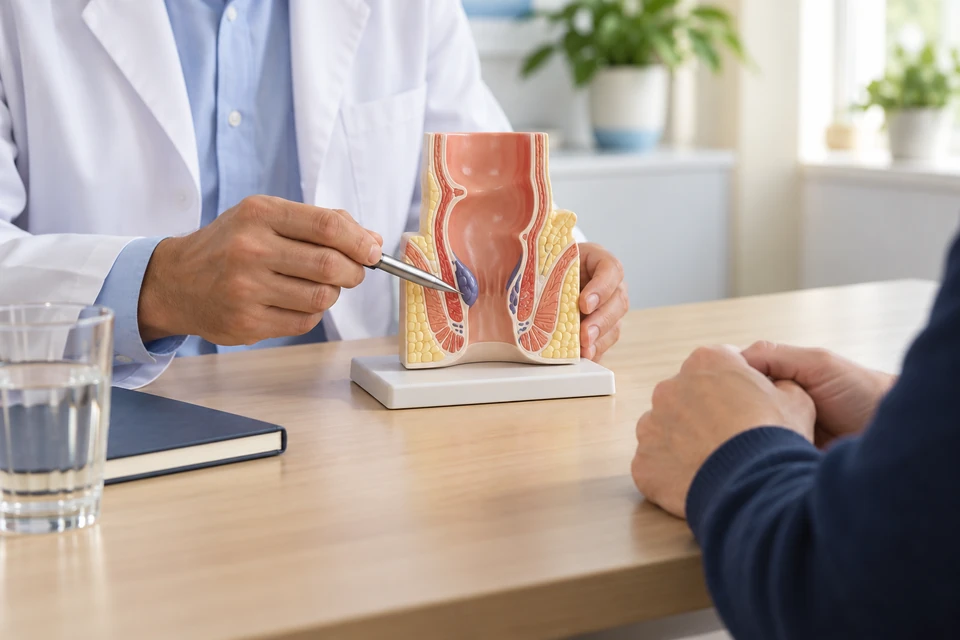
Understanding haemorrhoidal disease
Haemorrhoidal cushions are normal anal structures. They become a clinical problem when enlargement causes bleeding, prolapse or discomfort. Internal haemorrhoids commonly cause bleeding or protrusion; a thrombosed external haemorrhoid can produce a suddenly painful lump. Itching and hygiene difficulties may occur. Other conditions can cause similar symptoms, so treatment is based on a confirmed diagnosis and the symptoms that matter most.
Confirming the source of bleeding
Assessment considers bleeding pattern, bowel habits and medicines, with inspection, examination and sometimes anoscopy. Anaemia, weight loss, altered bowel habits, family history and other risk factors may justify further bowel investigation. Finding haemorrhoids does not exclude another bleeding source. Previous treatment, pregnancy history and existing leakage should be discussed, particularly when symptoms and examination findings do not match.
First-line management
Management starts with comfortable stool consistency, less straining and avoiding prolonged toilet sitting. Fibre and fluid advice should reflect diet and other conditions; frequent diarrhoea also needs attention. Topical products may provide short-term relief but do not necessarily correct prolapse. Persistent symptoms can prompt procedural treatment. The objective is symptom control rather than removing every normal haemorrhoidal structure.
Procedures and operations
Office procedures such as rubber-band ligation can treat suitable internal haemorrhoids. Other techniques are selected by anatomy. Excision may be considered for a substantial external component, advanced prolapse or persistent symptoms. Alternatives such as arterial ligation have different recurrence and symptom trade-offs. Selected thrombosed external haemorrhoids may benefit from excision. A device name alone cannot guarantee painless treatment or lasting success.
Risks and realistic expectations
Depending on the treatment, risks include pain, bleeding, urinary difficulty, infection and recurrence. Anal narrowing or altered continence are less common concerns. Delayed bleeding after banding needs particular consideration with anticoagulants, whose management must be coordinated. Less postoperative discomfort can come with different recurrence risks. New bleeding after successful treatment should still be assessed rather than automatically assigned to the previous diagnosis.
Preparation and aftercare
Provide a complete medication, allergy and previous surgery history. Preparation differs between procedures, so follow the specific instructions. Aftercare addresses pain, soft stools and gentle cleansing. Constipation treatment may be needed. Return to work, exercise and prolonged sitting depends on the procedure and symptoms. Follow-up should review bleeding, prolapse and evacuation as well as wound healing.
When prompt help is needed
Heavy or persistent bleeding with dizziness or faintness may need emergency care. Increasing anal pain, fever, shivering or inability to urinate after a procedure require prompt help, including after banding. A newly painful swelling may be an abscess or another condition. Persistent small-volume bleeding also deserves review. Do not cut, puncture or apply caustic substances to a lump at home.
This information is general. The cause of symptoms, appropriate investigations and treatment options are determined through individual assessment.