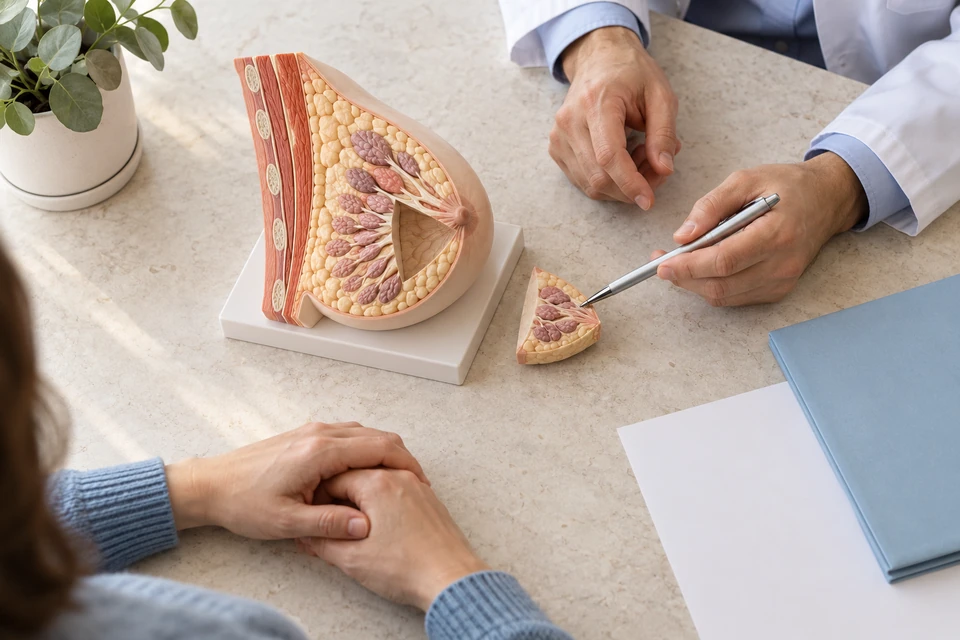
The aim of breast conservation
Breast conservation aims to remove cancer with appropriate margins while retaining useful breast tissue. Terms such as lumpectomy, wide local excision and partial mastectomy describe related operations. The extent of surgery depends on the cancer's distribution, the breast's size and the additional treatments planned as part of the overall strategy.
Who may be suitable?
Suitability depends on tumour-to-breast size, disease distribution, skin or chest-wall involvement and the feasibility of radiotherapy. Previous irradiation, inherited risk and personal preferences may change the options. Preoperative systemic treatment can sometimes make conservation possible. A smaller operation still requires a complete cancer treatment plan.
Preoperative assessment
Biopsy findings and tumour biology are reviewed alongside breast and axillary imaging. MRI is reserved for selected circumstances rather than being compulsory. A biopsy marker can help identify a lesion after it shrinks with treatment. Lymph-node assessment is a separate decision and is not determined solely by choosing breast conservation.
The operation and its margins
The tumour is removed with surrounding tissue and the specimen margins are examined microscopically. Localisation may guide removal of a non-palpable target. If disease reaches an unacceptable margin, further excision or occasionally mastectomy may be needed. Margin requirements depend on the pathology, so a second operation cannot always be ruled out in advance.
Radiotherapy and other treatments
Radiotherapy is commonly part of treatment after conservation, although selected low-risk situations may allow a different discussion. Endocrine treatment, chemotherapy and targeted medicines depend mainly on tumour biology and stage. The team coordinates their order and timing. Practical arrangements for radiotherapy deserve discussion before the surgical decision is finalised.
Appearance, sensation and risks
Possible changes include reduced volume, asymmetry, scars and altered sensation; radiotherapy may also change the breast over time. Oncoplastic techniques may help selected patients. Surgical risks include bleeding, infection and fluid collection. Lymph-node procedures add their own risks, including arm swelling, and cosmetic expectations should be discussed realistically.
Preparation and recovery planning
Preparation covers medication review, general health, smoking and any localisation or lymphatic mapping required. Recovery advice includes wound care, pain control and appropriate arm movement. Return to normal activities varies with the operation and subsequent treatment. Arrange practical support and keep a clear record of appointments and discharge instructions.
Results and longer-term follow-up
Follow-up brings together the final pathology, margins, lymph-node results and the next treatment step. Imaging of remaining breast tissue continues according to an individual plan. Report rapidly increasing swelling, fever, spreading redness or worsening pain promptly, and raise new breast changes rather than waiting for the next routine review.
This information is general. The cause of symptoms, appropriate investigations and treatment options are determined through individual assessment.