How an abscess presents
An anal abscess is an infected collection in tissues around the anus or deeper nearby spaces. It can cause increasing constant pain, difficulty sitting, swelling, redness or fever. Deep abscesses may produce little visible swelling. They can be mistaken for haemorrhoids or fissures. Spontaneous discharge does not prove resolution, particularly in people with diabetes or suppressed immunity.
Diagnosis and determining depth
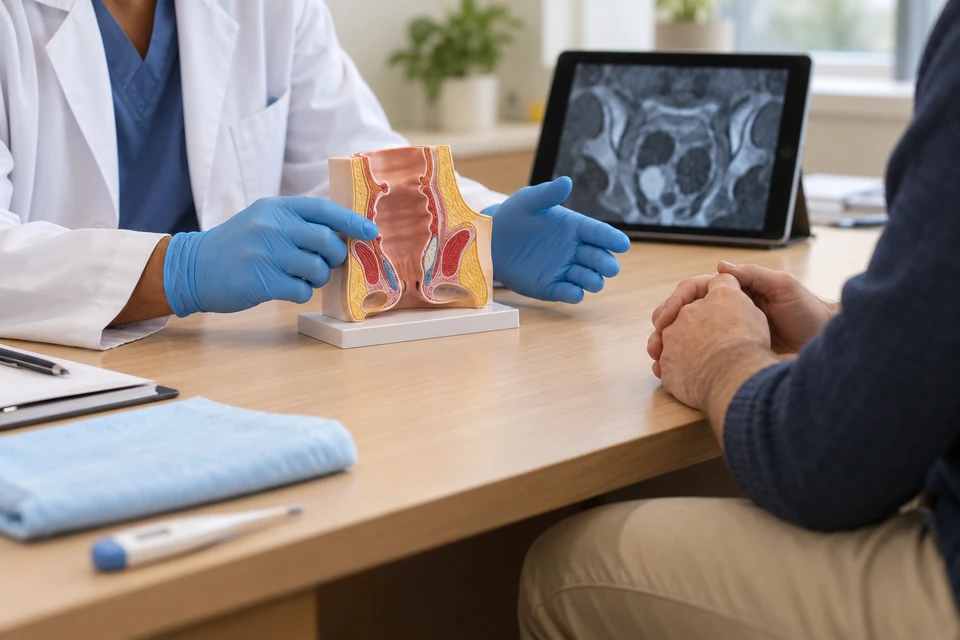
Examination assesses tenderness, redness, drainage and signs of systemic infection. Straightforward superficial abscesses may not require imaging. Deep, recurrent or complex infection can need MRI, CT or other investigations. Report earlier abscesses, fistulas, Crohn's disease, diabetes and immunosuppressive treatment. Anaesthesia may be needed for adequate examination. Investigation should not unnecessarily delay treatment of a serious infection.
Drainage and the role of antibiotics
Treatment usually centres on opening and draining the abscess. Antibiotics are added selectively for circumstances such as spreading infection, systemic illness or impaired immunity. They do not reliably replace drainage of a closed collection. A small surface swelling may have deeper extensions, making home puncture unsafe. Urgency depends on infection severity and general condition, not just temporary pain relief.
The procedure and its relationship to fistula
Drainage is performed with local or general anaesthesia according to location and extent. Pus is released, and the wound is managed to allow continuing drainage; a drain may sometimes be used. A fistula can coexist, but infection may obscure its full anatomy. Definitive fistula treatment is not always appropriate immediately. Preserving the sphincter can require later assessment and staged management.
Recurrence and other risks
Bleeding, reaccumulation, persistent infection or repeat drainage may occur. A lasting tract, or anal fistula, can follow an abscess, causing recurrent swelling or continued discharge. Drainage controls the present infection but cannot guarantee that a fistula will not develop. Deep disease and other conditions may require closer follow-up. Discharge advice should distinguish expected wound drainage from signs of renewed infection.
Care after drainage
The wound is often left able to drain, with dressings or drain care following the team's instructions. Gentle cleaning, pain relief and comfortable bowel movements help. Do not insert packing or apply substances without guidance. Take any prescribed antibiotics as directed. Diabetes management also matters. Monitor the direction of pain and drainage, seeking review if improvement stalls or symptoms return.
Signs of a serious infection
Fever, shivering, rapidly increasing pain, spreading redness or swelling need urgent assessment. Marked weakness, confusion, faintness or urinary difficulty also matter. Severe pain or colour change spreading towards the genital area can indicate a dangerous infection. Do not wait for routine review if symptoms worsen after drainage. Lack of high fever does not exclude serious infection in an immunocompromised person.
This information is general. The cause of symptoms, appropriate investigations and treatment options are determined through individual assessment.