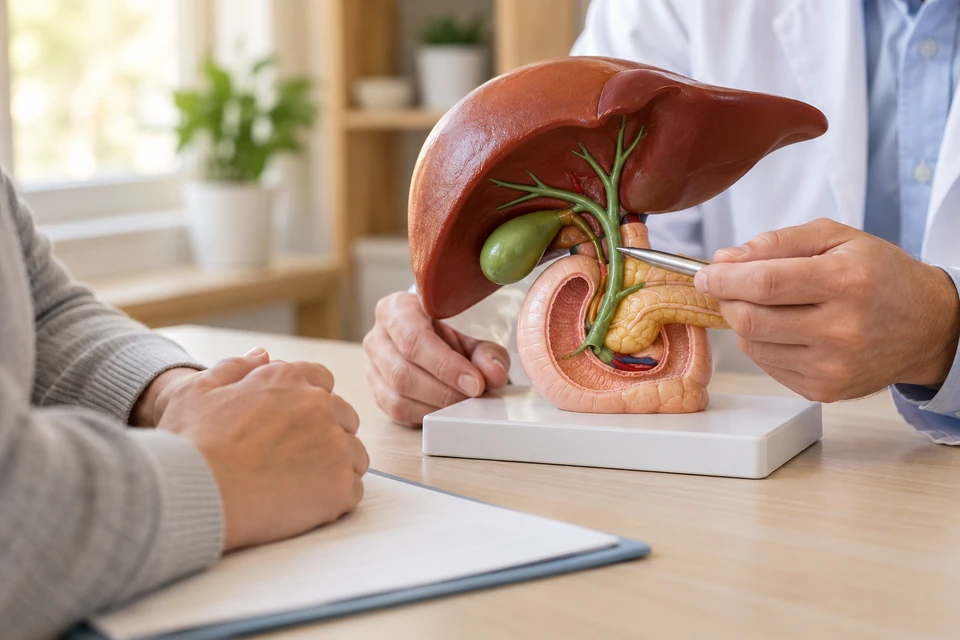
Bile ducts and the gallbladder
Bile ducts carry bile from the liver to the intestine, while the gallbladder stores it. Gallbladder removal and bile duct treatment are therefore different procedures. Stones, strictures, injury or cancer may obstruct flow. Treatment must address both drainage and the underlying cause rather than assuming that every obstruction needs the same operation.
Diagnostic assessment
Blood tests assess obstruction, liver function and infection. Ultrasound may be followed by MRCP, CT or endoscopic ultrasound. A suspicious stricture may need carefully planned sampling. ERCP is often used when treatment is required because it carries its own risks. Previous operation and endoscopy reports help establish anatomy and cause.
Stones and benign strictures
Duct stones may be removed endoscopically or during suitable surgery. Selected benign strictures may be dilated or temporarily stented. A stent is not always a permanent solution and may need removal or exchange. Surgery is considered when other approaches are unsuitable or unsuccessful, with gallbladder treatment addressed separately.
Surgery for injury or cancer
Bile duct injury may require repair or reconstruction of drainage into the intestine, depending on its extent. Cancer surgery varies by tumour location and may involve the liver or pancreatic region. These are substantially different operations. Complex disease requires specialist multidisciplinary planning rather than a single generic surgical solution.
The role of non-surgical treatment
Not every bile duct cancer can be removed surgically. Systemic or other cancer treatments may take priority. Endoscopic or percutaneous drainage can relieve obstruction or prepare for later treatment, especially when infection is present. Clarify whether a procedure is intended to diagnose, temporarily relieve symptoms or provide definitive treatment.
Preparation and risks
Preparation reviews nutrition, hydration, clotting, liver function and medicines. Surgical risks include bleeding, infection, bile leak and later narrowing. Endoscopic treatment has different risks, including pancreatitis, bleeding or perforation. Share details of existing stents or drains. The safest choice cannot be judged simply by whether an incision is needed.
Follow-up of drains and stents
Follow-up checks jaundice, liver tests, healing and pathology. Any drain or stent needs a documented review, exchange or removal plan; do not manipulate it yourself. Late narrowing can occur, so follow-up extends beyond wound healing. Nutrition, activity and additional cancer treatment are coordinated according to the procedure.
When jaundice accompanies fever
Jaundice with fever, chills or abdominal pain may indicate biliary infection and needs urgent assessment. Confusion, fainting or rapid deterioration requires emergency help. After a procedure, worsening pain, persistent vomiting, increasing distension or unexpected drain changes should be reported promptly, with details of any recent intervention or stent.
This information is general. The cause of symptoms, appropriate investigations and treatment options are determined through individual assessment.