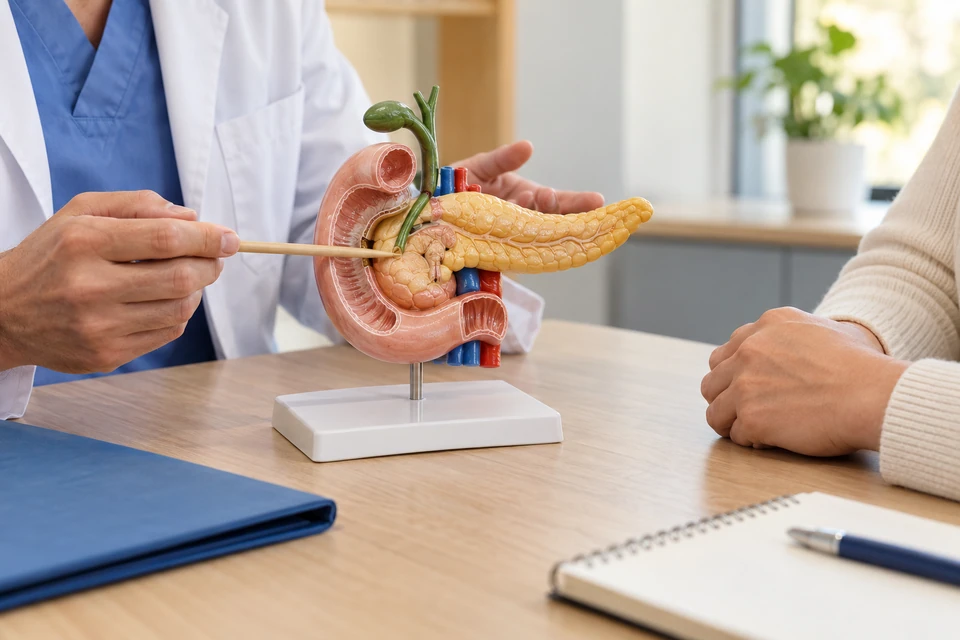
Conditions for which it is considered
Pancreaticoduodenectomy may be considered for selected pancreatic-head, distal bile duct, ampullary or duodenal conditions. It is not the operation for every pancreatic mass. Some benign or precancerous lesions may also warrant it. In cancer, extent and vascular relationships help determine whether removal is both feasible and appropriate.
Staging and fitness for surgery
Cross-sectional imaging assesses location and spread, with endoscopic ultrasound or sampling when indicated. Jaundice, weight loss, nutrition and glucose control are reviewed alongside heart, lung and functional fitness. The need and route for biopsy depend on the treatment plan. Multidisciplinary assessment is essential for this major operation.
Could other treatment come first?
Some cancers are treated systemically before reassessing surgery. Biliary drainage is considered according to infection, jaundice and treatment sequencing rather than being automatic. When disease cannot be removed, medicines and symptom-relieving procedures may take priority. Clarify whether the proposed treatment aims at resection or relief of symptoms.
What changes during the operation?
The operation usually removes the pancreatic head, duodenum, gallbladder and part of the bile duct; some variants also remove part of the stomach. New connections restore the passage of pancreatic juice, bile and food. The exact extent depends on the disease and should be explained using your imaging.
Main risks
Risks include bleeding, infection and clots, as well as pancreatic or bile leakage and delayed stomach emptying. Nutritional difficulties, weight loss and glucose changes may need treatment. Complications can require drainage, endoscopy or further surgery. The discussion should cover the whole recovery pathway, not only the operation itself.
Preparation and nutritional support
Weight loss or poor intake may require dietetic support before surgery. Smoking, alcohol, physical fitness and existing illnesses are reviewed, with appropriate preparation to improve resilience. Medicine changes and practical help are arranged individually. Worsening jaundice, vomiting or inability to eat should be reported before the planned operation.
Digestion, enzymes and ongoing care
Food intake is adjusted gradually to tolerance. Pancreatic enzyme deficiency may cause greasy stools, bloating or weight loss, and some patients need enzyme replacement or diabetes treatment. Individual dietetic advice is preferable to a universal diet. Pathology guides any additional oncology treatment, while follow-up also tracks weight, strength and daily function.
Warning signs after discharge
Fever, worsening abdominal pain, persistent vomiting, inability to drink, jaundice or general deterioration needs prompt assessment. Report unexpected drain changes without manipulating the drain. Fainting, vomiting blood, black stools, chest pain or breathlessness requires emergency help. Keep a written nutrition, medicine and contact plan available after discharge.
This information is general. The cause of symptoms, appropriate investigations and treatment options are determined through individual assessment.