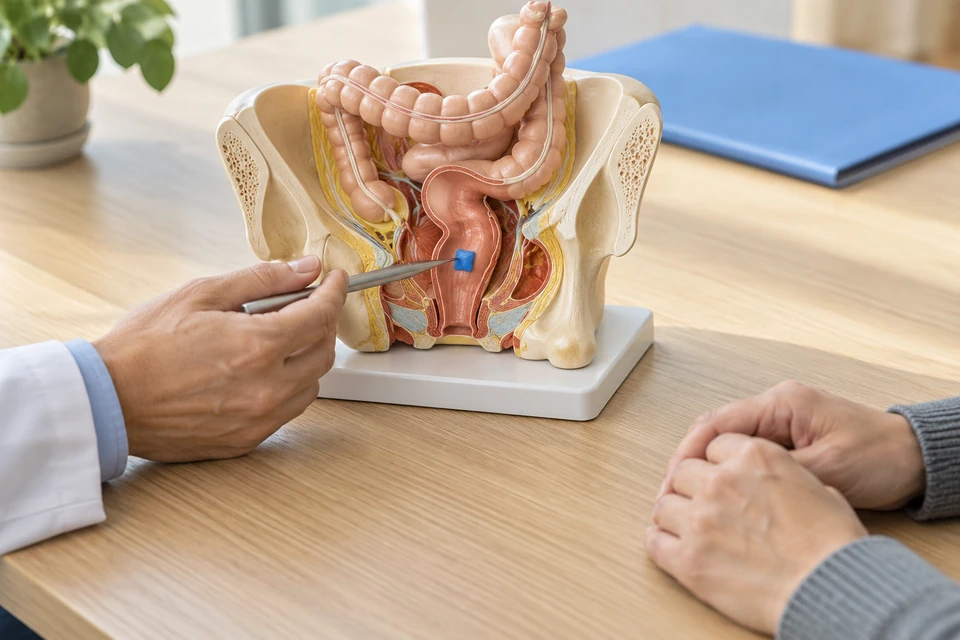
The role of surgery
The rectum stores stool before it passes through the anus. Surgery aims to remove the cancer with appropriate surrounding tissue and, when necessary, regional lymph nodes. Its extent depends on tumour position, depth and relationship to nearby structures. Existing bowel control also matters. Selected early cancers may allow a limited procedure; more advanced disease commonly needs a combined treatment plan.
Assessment before treatment
Diagnosis usually requires a colonoscopy biopsy. Pelvic MRI helps assess local spread and the relationship to planned surgical margins, while other imaging evaluates distant disease. Blood tests, nutritional assessment and tumour biology may influence treatment. Previous pelvic operations, radiotherapy, urinary symptoms and sexual function should be discussed. These findings are reviewed together rather than using a single scan to select an operation.
Other treatments and sequencing
A multidisciplinary team decides how surgery, chemotherapy and radiotherapy should be combined. Treatment before surgery is appropriate for some cancers. Tumour biology can open additional systemic treatment options. Selected complete responders may consider a structured nonoperative surveillance programme with an experienced team. This requires repeated examinations and imaging, and surgery may still become necessary. Obstruction or bleeding can change the immediate priorities.
Possible operations
When safe, the diseased rectum is removed and the colon is joined to the remaining rectum or anus. Mesorectal excision removes the surrounding tissue containing lymphatic structures. A very low tumour involving the sphincter may require removal of the anus and a permanent colostomy. A temporary ileostomy can protect a new connection. Open and minimally invasive approaches are selected according to the clinical situation.
Risks and bowel function
Risks include bleeding, infection, clots and leakage from a bowel connection. Surgery near pelvic nerves may affect bladder or sexual function. Even with sphincter preservation, urgency, repeated small bowel movements or leakage can occur as part of low anterior resection syndrome. The possibility of further treatment or a lasting stoma should be discussed alongside cancer control and everyday function.
Preparation and follow-up
Preparation may include nutritional support, improving fitness and controlling other conditions. Follow the team's bowel preparation and medication instructions; do not stop anticoagulants independently. Stoma education is useful when diversion is possible. Recovery combines pain control, mobilisation and nutritional support. The final pathology guides further treatment, while a personalised surveillance plan checks for recurrence and addresses bowel, bladder and sexual difficulties.
When to seek urgent help
Increasing abdominal or pelvic pain, fever, marked weakness, persistent vomiting or abdominal swelling require prompt assessment. Heavy bleeding, breathlessness, chest pain or new swelling in one leg may need emergency care. A sudden change in stoma output or signs of dehydration also deserve attention. Discharge instructions should identify whom to contact; rapidly worsening symptoms should not wait for a routine appointment.
This information is general. The cause of symptoms, appropriate investigations and treatment options are determined through individual assessment.