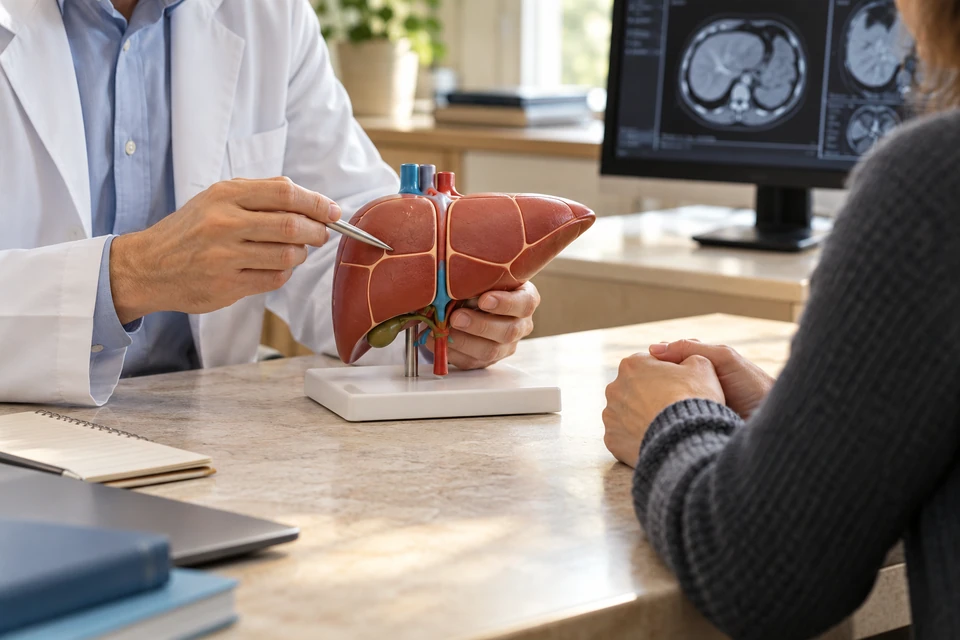
When is liver surgery considered?
Liver resection removes part of the liver. It may be considered for selected primary tumours, metastases or certain benign conditions. A mass on imaging does not automatically require surgery. Its type, location, number and disease elsewhere all matter, so similar-sized lesions can lead to very different treatment recommendations.
Diagnosis and disease extent
Contrast CT or MRI evaluates lesion characteristics and vascular relationships. Prior cancer, hepatitis and chronic liver disease affect interpretation. Blood tests and selected tumour markers support assessment but are not diagnostic alone. Biopsy is planned when it will change management, and multidisciplinary review coordinates surgery with other treatment options.
Why the remaining liver matters
The liver can regenerate, but that capacity has limits. Cirrhosis, fatty change, previous treatment and portal hypertension affect how much tissue can safely be removed. Both the volume and function of the future remnant are assessed. Selected patients may need staged preparation before resection can be considered.
Alternatives to resection
Depending on the diagnosis, alternatives include observation, ablation, liver-directed vascular treatment or systemic therapy. These are not equivalent for every lesion. Liver function, location and disease extent determine suitability, and treatments may be combined or sequenced. Ask why surgery is or is not appropriate and whether reassessment is possible later.
Extent and approach
Resection ranges from removal of a small area to a larger liver section. Vascular and biliary anatomy influence planning. Minimally invasive surgery may suit selected patients, while open surgery may be preferable for others. Intraoperative findings can alter the plan, and consent should address possible changes and postoperative support.
Risks and preparation
Major risks include bleeding, bile leak, infection, clots and inadequate function of the remaining liver. Preparation reviews nutrition, strength, alcohol, smoking, medicines and associated illnesses. Existing liver-related problems need attention. Individual movement and breathing preparation may support recovery, and medication changes should be supervised.
Pathology, nutrition and follow-up
Follow-up monitors liver tests, fluid balance, nutrition and healing. Pathology clarifies the diagnosis and margins and may affect further treatment. Drains need an explicit care plan. Recovery varies with resection extent. Cancer surveillance and management of underlying liver disease continue after the wound has healed.
Symptoms that require prompt attention
Seek prompt assessment for worsening pain, fever, jaundice, increasing abdominal swelling, persistent vomiting or inability to eat. Excessive drowsiness, confusion, fainting, breathlessness or chest pain needs emergency evaluation. Report unexpected drain or wound changes and keep the operation summary and medication list available.
This information is general. The cause of symptoms, appropriate investigations and treatment options are determined through individual assessment.