Relationship to previous surgery
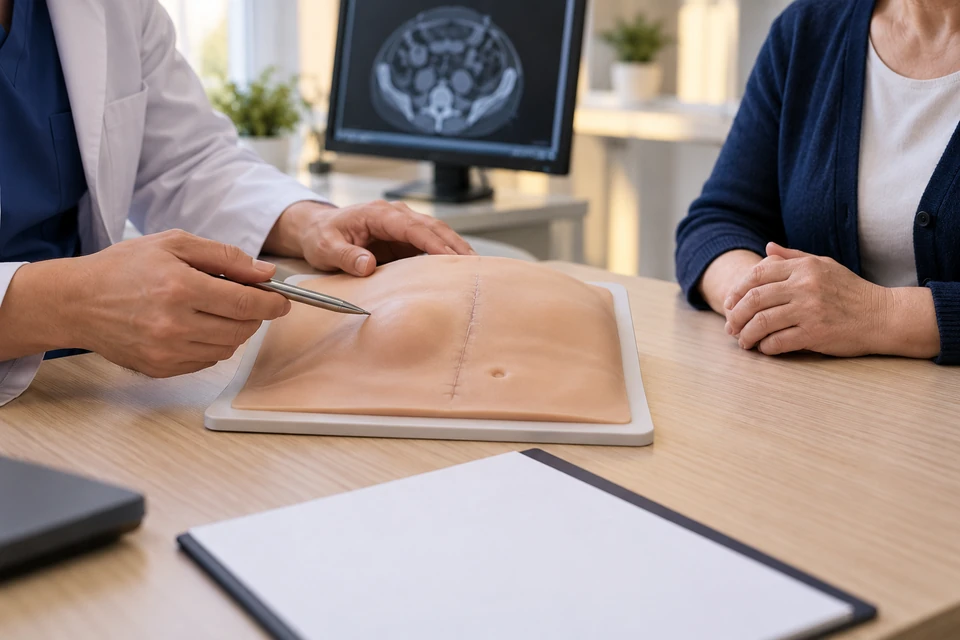
An incisional hernia develops through a previous abdominal incision or port site. It can cause bulging, pulling and activity-related discomfort, sometimes progressively limiting daily life. Infection, smoking, obesity and impaired healing can contribute. A healed skin scar does not establish the strength of deeper tissues. Small defects differ from extensive abdominal-wall problems, and previous repairs or mesh influence planning.
Imaging and planning reconstruction
Examination assesses the position, size, number and reducibility of defects. CT often assists planning in larger or complex hernias by showing muscles, contents and previous mesh. Major hernias can alter the relationship between abdominal capacity and displaced contents. Previous reports and infections matter. Assessment considers other pain sources and aims for safe restoration of abdominal-wall function, not closure alone.
Observation and optimisation
Observation may suit selected minimally symptomatic, reducible hernias. Pain, growth, functional limitation or trapping influence the decision. Before elective repair, smoking cessation, glucose control, nutrition and conditioning can improve readiness. Weight goals should be individualised, balancing risk reduction against indefinite delay. A garment may improve comfort but does not close the defect. Complex repair also requires realistic expectations and support planning.
Repair technique and mesh placement
Most incisional repairs use mesh, with its type and anatomical plane selected for the defect. Closing the fascial opening and restoring functional relationships is desirable when feasible. Large or complex defects may require advanced tissue-release techniques. Open, laparoscopic and robotic approaches have different applications. Adhesions and previous mesh can complicate the operation, making specialist abdominal-wall assessment valuable in complex cases.
Risks and longer-term outcome
Risks include infection, fluid collections, bleeding, wound problems and persistent pain. Adhesion separation can injure bowel; obstruction or, less commonly, fistula may follow. Mesh infection can require further treatment. Recurrence remains possible. Extensive reconstruction may introduce additional breathing or pressure-related concerns. Risks should be personalised without promising zero recurrence or relief of every pre-existing pain.
Preparation and staged recovery
Preparation reviews medication, nutrition, anaemia and other conditions, while arranging work and home support. Recovery combines pain control, breathing exercises and safe movement with monitoring of eating and bowel function. Follow individual wound or drain instructions. Heavy lifting and sport depend on reconstruction extent. Follow-up should assess new swelling, pain and function, with rehabilitation when needed rather than prolonged unnecessary inactivity.
Emergency warning signs
A suddenly painful, firm, irreducible hernia with vomiting, swelling or inability to pass gas needs emergency assessment. Darkening skin and rapidly increasing pain are also concerning. After surgery, report fever, spreading redness, offensive discharge, wound opening or persistent vomiting. Breathlessness, chest pain, fainting and heavy bleeding require emergency help. New deterioration should not be dismissed as expected postoperative swelling.
This information is general. The cause of symptoms, appropriate investigations and treatment options are determined through individual assessment.