How is it different from mastitis?
Mastitis describes inflammation in the breast, whereas an abscess is a defined collection of pus. Not every painful, red lump is an abscess. It can occur during breastfeeding or outside lactation. Worsening pain, warmth, swelling or fever needs assessment rather than repeated use of an earlier prescription.
Diagnosis and ultrasound
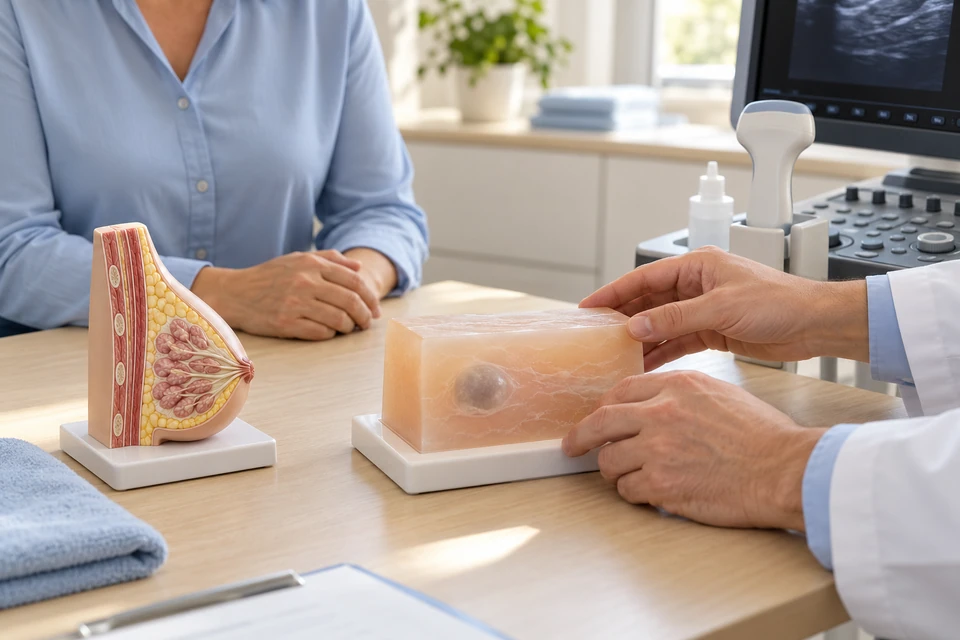
Examination assesses both local inflammation and general illness. Ultrasound identifies a drainable collection and its size or internal divisions. Culture may guide antibiotic selection. Recurrent, atypical or non-resolving disease needs investigation for an underlying cause; this is especially important outside breastfeeding, when further imaging or biopsy may be appropriate.
Options for drainage
Drainage is central to treatment. Image-guided needle aspiration may be suitable, sometimes with repeat aspiration or a small drain. Incision and drainage may be needed for selected complex collections, skin breakdown or unsuccessful initial treatment. Location, structure and overall health matter as well as size, and samples can guide subsequent care.
Medicines and supportive care
Antibiotic choice depends on the infection, clinical condition, cultures, allergies and breastfeeding status. Antibiotics alone may not be sufficient for a collection requiring drainage. Pain control and hydration are also considered. Do not independently alter the prescribed course; lack of improvement should lead to review rather than simply extending treatment.
Managing breastfeeding
An abscess does not automatically require stopping breastfeeding. Continuing may be possible with appropriate treatment, considering wound location, contact with infected drainage and medicine compatibility. If feeding is painful, obtain help with an individual expression and feeding plan. Avoid forceful massage or excessive attempts to empty the breast.
Preparation and possible complications
Report medicines, allergies, diabetes and conditions affecting immunity. Preparation depends on the anaesthetic needed. Possible problems include bleeding, discomfort, reaccumulation, scarring or persistent drainage, including milk-related leakage during lactation. Discussing these risks helps plan care rather than delaying necessary drainage. Arrange practical help with dressings if required.
Follow-up and recurrence
Review checks symptom improvement, reduction of the collection and culture results. Recurrent abscesses may require investigation of duct-related disease, smoking or other factors. A persistent lump should not simply be attributed to past infection. Repeat imaging may be needed, and any drain must be managed according to the team's instructions.
Signs needing urgent assessment
Rapidly spreading redness, fever, chills, worsening swelling or a deteriorating general condition needs urgent review. Confusion, fainting, breathing difficulty or profound weakness requires emergency help. People with diabetes or impaired immunity may need earlier assessment. Spontaneous drainage does not prove that the infection has resolved.
This information is general. The cause of symptoms, appropriate investigations and treatment options are determined through individual assessment.