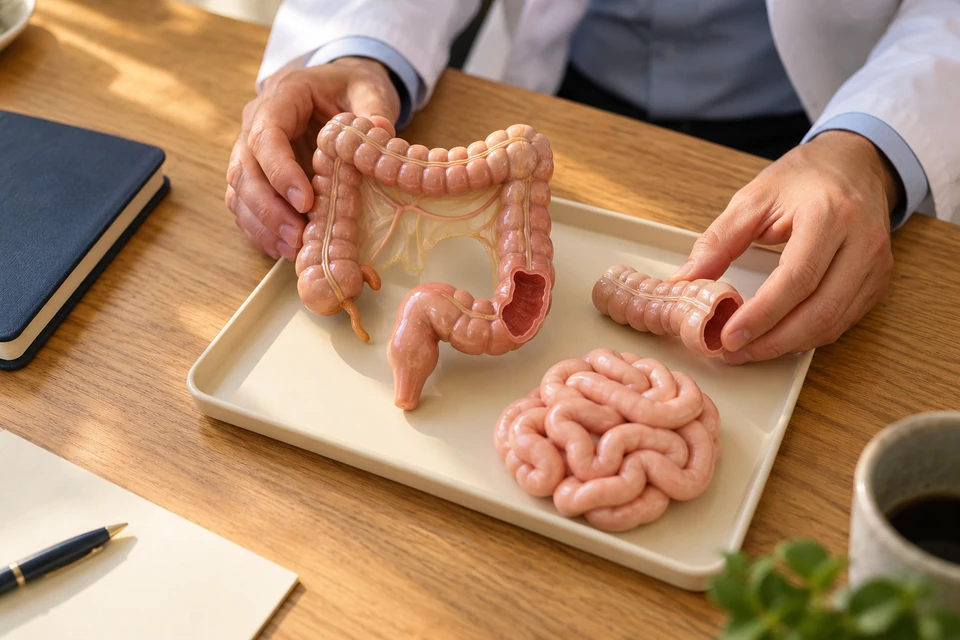
Understanding the different operations
Colectomy means removal of colon. A partial colectomy removes a segment, subtotal colectomy removes most of it, and total colectomy removes all the colon. Removing the rectum as well is a proctocolectomy. These are different operations. Extensive colitis, inherited polyposis, multiple tumours, severe bleeding or impaired blood supply can require different extents. The remaining anatomy matters as much as the name.
Establishing the indication
Endoscopy, biopsy and imaging define the disease and its extent. Severe colitis requires assessment of infection, severity and treatment response; cancer requires staging. Family history and selected genetic evaluation may influence the extent in inherited disease. Nutrition, anaemia, immunosuppressive treatment and other conditions affect risk. Rectal involvement and sphincter function shape reconstruction options, while emergencies may require a staged approach.
Alternatives and timing
Medicines are important for inflammatory bowel disease, but uncontrolled severe disease, perforation or major bleeding may require surgery. Endoscopic treatment suits some polyps, whereas extensive polyposis may need another strategy. Cancer has its own consequences of delay. Elective surgery can be considered before further deterioration. Decisions should compare realistic benefits, burdens and personal priorities rather than presenting surgery only as a last resort.
Connection, ileostomy and pouch options
If the rectum is suitable, an ileorectal connection may be possible, with continuing surveillance needs. A permanent end ileostomy is another option. Selected patients can have an ileal pouch joined to the anus after colon and rectum removal. Pouch surgery may require several stages and is not suitable for every disease. Emergency severe colitis often requires initial colectomy and ileostomy before reconstruction is reconsidered.
Risks and lasting functional changes
Risks include bleeding, infection, leakage, clots and obstruction. Losing colonic water absorption and storage can produce more frequent, liquid output. Stomas and pouches have their own complications, including pouch inflammation. Pelvic surgery adds urinary, sexual and fertility considerations. Removing the colon may not eliminate disease manifestations outside the bowel. Longer-term function depends on reconstruction and ongoing support, not simply completion of surgery.
Preparation and long-term follow-up
Preparation supports nutrition, strength and anaemia management. Steroids or immunosuppressants should not be stopped independently. Education about a stoma or pouch helps before surgery. Afterwards, monitor hydration, weight and bowel or stoma output. Remaining rectum or a pouch may require disease-specific endoscopic surveillance. Dietetic, nursing and specialist follow-up can identify deficiencies and functional difficulties, including when symptoms are limited.
Urgent symptoms and early contact
Severe pain, persistent vomiting, swelling, fever or rapid deterioration can require urgent assessment. Large watery output with little urine, dizziness or faintness suggests dehydration. New marked urgency, bleeding or increased frequency in a person with a pouch needs review. Heavy bleeding, chest pain or breathlessness require emergency help. Knowing the operation performed, remaining anatomy and current medicines assists the assessing team.
This information is general. The cause of symptoms, appropriate investigations and treatment options are determined through individual assessment.