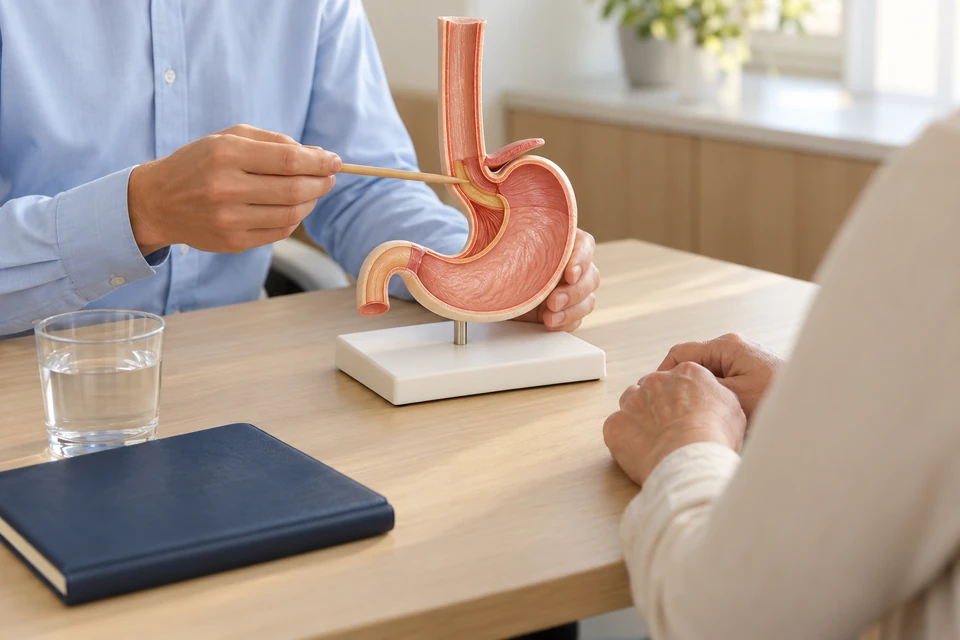
When reflux becomes a treatment concern
Occasional reflux is common. Recurrent troublesome symptoms or damage to the oesophagus may indicate reflux disease. Heartburn and regurgitation are typical, but cough, hoarseness and throat symptoms have several possible causes. These symptoms alone are insufficient grounds for surgery; their pattern and effect on daily life need careful assessment.
Confirming the diagnosis before surgery
Endoscopy may identify inflammation or narrowing, but a normal examination does not exclude reflux. Reflux monitoring can document abnormal exposure. Assessment of oesophageal function helps identify alternative disorders and plan treatment. Whether testing is performed on or off acid-suppressing medicine depends on the clinical question and the team’s instructions.
The role of non-surgical treatment
Treatment may include meal timing, weight management when appropriate, and medicines. Individual triggers are more useful than a universal list of forbidden foods. Persistent symptoms should prompt a review of treatment use and possible alternative diagnoses. Many people whose symptoms are well controlled do not need an operation.
Who may benefit from an intervention?
Surgery may be discussed for selected people with confirmed reflux, particularly troublesome regurgitation despite appropriate treatment. Anatomy, a large hiatal hernia and oesophageal inflammation may influence the choice. Endoscopic and surgical options have different eligibility criteria. An intervention cannot guarantee that medicines will never be needed or that every throat symptom will resolve.
What fundoplication aims to do
Fundoplication uses the upper stomach to strengthen the barrier at the lower oesophagus. A relevant hiatal hernia may be repaired as part of the procedure. The extent of the wrap is discussed alongside swallowing function, anatomy and preferences. A technique’s name alone does not establish that it is suitable for an individual.
Risks and preparation
Possible problems include swallowing difficulty, bloating, impaired belching or vomiting, recurrent reflux and the need for further treatment. General surgical and anaesthetic risks also apply. Preparation includes reviewing medicines and other illnesses, explaining postoperative eating, and identifying which symptom the operation is chiefly intended to improve.
Eating, medicines and review
Food texture and portion size follow the postoperative plan. Persistent swallowing difficulty, vomiting or weight loss needs review. Decisions about reducing reflux medicines are made with the treating team. If symptoms return, reassessment should establish their cause before another operation is considered; recurrence of discomfort is not itself proof of surgical failure.
When urgent assessment is needed
Severe new chest pain, breathlessness or fainting should not be assumed to be reflux. Vomiting blood, black stools or inability to swallow fluids also require prompt assessment. After surgery, increasing pain with fever or sudden deterioration warrants urgent help. Persistent milder symptoms should be reviewed before they compromise nutrition or hydration.
This information is general. The cause of symptoms, appropriate investigations and treatment options are determined through individual assessment.
Medical references
- ACG — Diagnosis and management of gastroesophageal reflux disease, 2022
- ACG — Clinical use of oesophageal physiological testing
- NIDDK — Treatment for GER and GERD
- ASGE — Diagnosis and management of GERD, 2025 recommendations
- Guy’s and St Thomas’ — Fundoplication surgery for severe acid reflux
- ASGBI, AUGIS and NHS — Hiatus hernia repair and surgery for heartburn