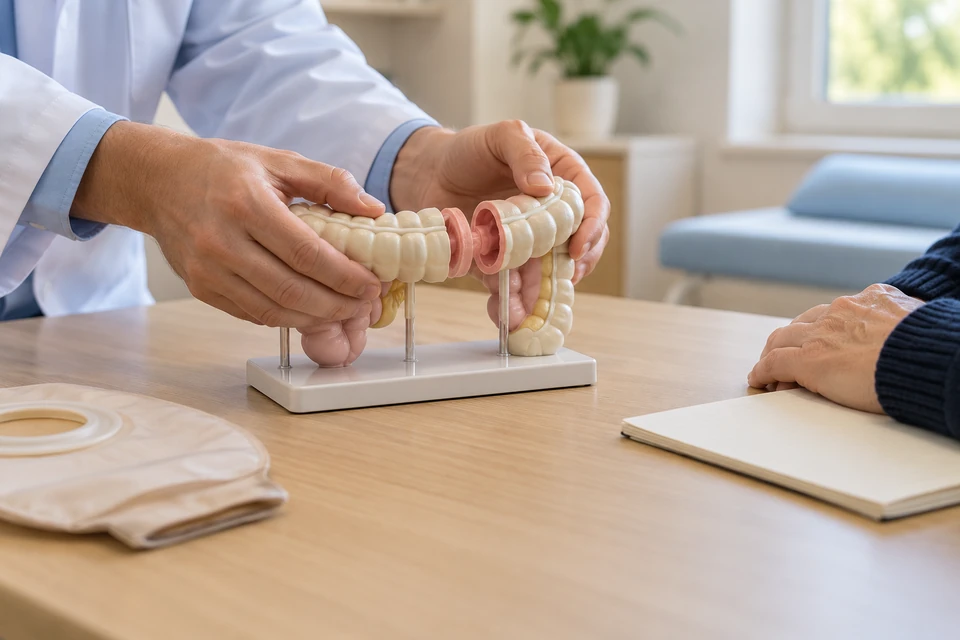
The aim of reversal
Reversal reconnects the bowel so stool can pass through the anus again. It may be possible after a temporary ileostomy or colostomy, but the original intention is not a guarantee. Disease progression, general health and expected continence can change the decision. The discussion should compare the burden of another operation with likely everyday function, rather than focus only on removing the pouch.
Assessing suitability
The team reviews the original operation, the reason for diversion and the remaining anatomy. Healing may be assessed with examination, endoscopy or selected imaging rather than one mandatory test for everyone. Infection, active disease, nutrition and ongoing cancer treatment affect timing. Fitness for anaesthesia is reassessed. Previous leakage, pelvic radiotherapy and sphincter function are important when discussing bowel control after reversal.
Timing and the option to keep a stoma
There is no universal timetable. Healing, previous complications, other treatment and physical recovery guide scheduling. Delaying reversal or continuing with a functioning stoma may be reasonable when operative risk or expected incontinence is substantial. Personal priorities are part of the decision. Discuss whether later reassessment is possible and what ongoing care is needed if the stoma remains.
What surgery involves
Loop stoma closure can often be performed through an incision around the stoma. Reversing an end colostomy after a Hartmann procedure may require more extensive abdominal surgery and separation of adhesions. Open or minimally invasive access depends on anatomy and previous operations. Unexpected findings can change the plan. Wound closure is tailored to infection risk; reversal should not be assumed to be a minor operation.
Risks and the new bowel pattern
Risks include leakage, wound infection, bleeding, delayed bowel activity and obstruction. A hernia can later develop at the former stoma site. Frequent stools, urgency, fragmented emptying or leakage are possible, especially after rectal surgery. The bowel removed and previous treatments influence function. Some symptoms improve with adaptation; others need targeted management. A technically successful connection does not necessarily restore the previous bowel pattern.
Preparation and care at home
Preparation reviews nutrition, other conditions and medication instructions. Eating, movement and wound care are adjusted after surgery. A bowel diary can clarify frequency and food-related patterns. Gentle cleansing and suitable skin protection may reduce soreness. Pelvic-floor support or medicines can be considered with the treating team. Do not start bowel-slowing agents or laxatives independently when obstruction or another complication is possible.
Symptoms that should not wait
Increasing pain, fever, marked swelling, persistent vomiting or inability to pass gas require prompt assessment. Report wound opening, spreading redness or offensive discharge. Frequent watery stools with reduced urine or dizziness suggest dehydration. Heavy bleeding, fainting, chest pain or breathlessness need emergency care. An unsettled bowel pattern can occur early, but a worsening general condition should not be treated as expected adaptation.
This information is general. The cause of symptoms, appropriate investigations and treatment options are determined through individual assessment.