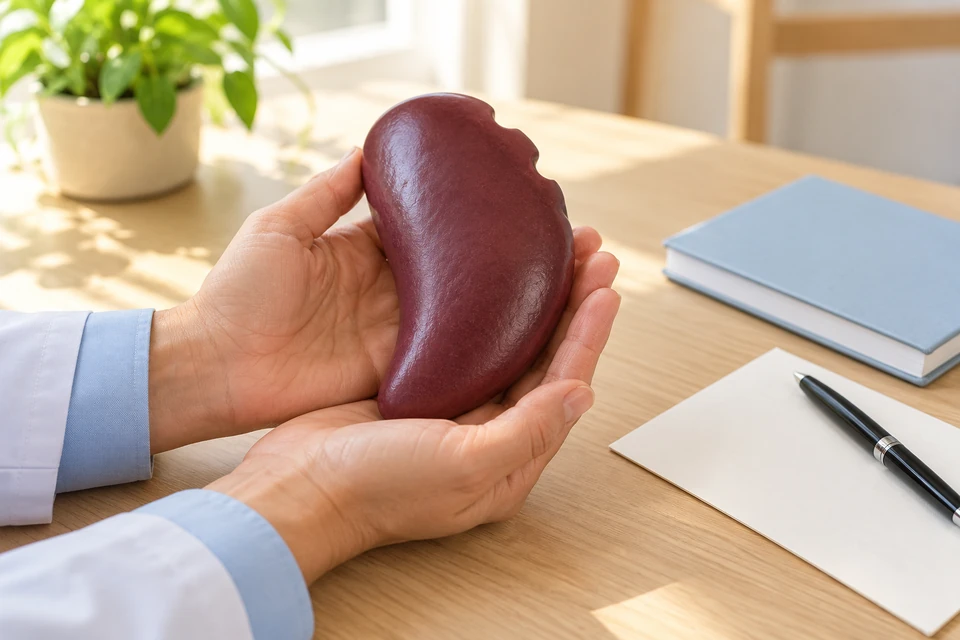
What the spleen does and why it may be removed
The spleen helps regulate blood cells and defend against certain infections. Removal may be needed for uncontrolled bleeding, selected blood disorders or particular lesions. Enlargement alone is not an automatic indication. The discussion should identify the problem surgery aims to address and whether spleen-preserving options are suitable.
Assessment and investigations
Blood counts, clotting tests and disease-specific investigations guide assessment. Ultrasound or CT can define spleen size and surrounding anatomy. In trauma, bleeding and circulation take priority. Infection history, medicines and vaccination records help prepare for elective surgery and establish the longer-term prevention plan.
Non-surgical and spleen-preserving options
Depending on the disease, medicines may offer an alternative. Selected stable trauma patients may be managed with close observation or a procedure to control bleeding through the blood vessels. Partial removal is possible in some circumstances. Suitability depends on diagnosis, anatomy, bleeding risk and access to appropriate monitoring.
How the operation is approached
The spleen’s blood supply is controlled before it is separated and removed. A minimally invasive approach may be suitable, while size, bleeding or adhesions may require open surgery. The approach can change for safety. In certain blood disorders, additional small areas of splenic tissue also matter to planning.
Risks and preparation
Risks include bleeding, infection, clots and injury to nearby organs, including the pancreas. Preparation may involve blood products or disease-specific measures. Vaccinations are planned before elective surgery where possible; after emergency surgery, the team arranges appropriate timing. A personal record helps maintain continuity between hospital and community care.
Preventing infection after spleen removal
Serious infection risk remains increased after splenectomy, even years later. Vaccination plans reflect age, previous doses and current national recommendations. Preventive or emergency antibiotics may be prescribed according to individual risk, with clear instructions. Vaccination reduces risk but does not remove the need for urgent assessment of fever.
Recovery, follow-up and daily life
Follow-up includes wound healing, blood counts and the underlying condition. Keep a vaccination record and carry information stating that the spleen has been removed. Tell healthcare professionals before travel and after animal bites or infection symptoms. Activity and work plans should reflect both surgical recovery and the original disease.
What to do about fever or sudden illness
Fever, chills, rapidly worsening illness, confusion or breathlessness after splenectomy requires urgent assessment. State immediately that you do not have a spleen. An emergency antibiotic plan must not delay medical care. Severe abdominal pain, fainting, sudden chest pain or a swollen leg also needs urgent attention after surgery.
This information is general. The cause of symptoms, appropriate investigations and treatment options are determined through individual assessment.