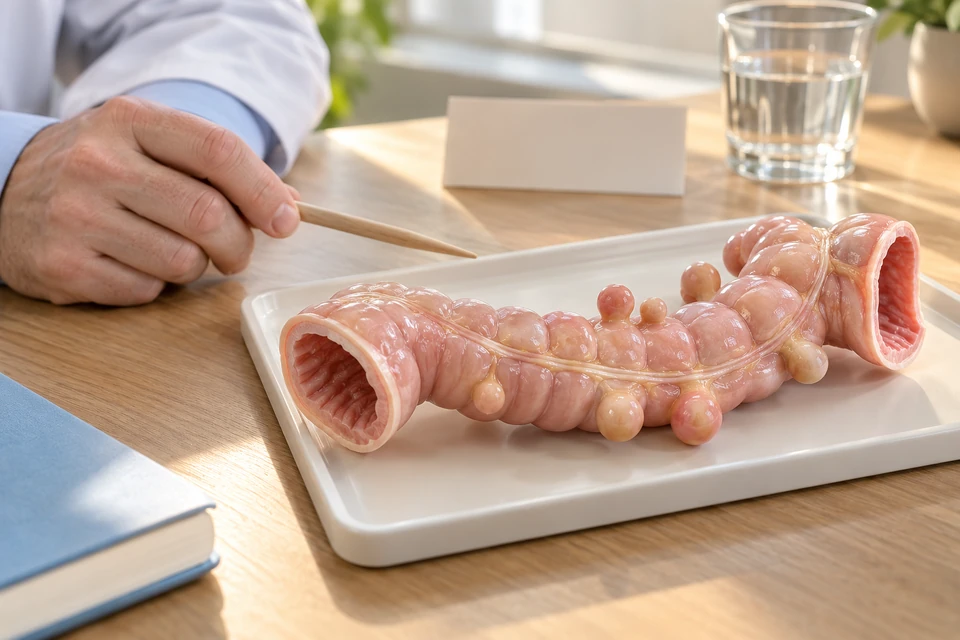
Understanding diverticular disease
Diverticula are small pouches in the colon wall. Their presence alone does not require surgery. Inflammation is called diverticulitis and may remain localised or lead to an abscess, perforation, fistula or narrowing. Bleeding can occur through a separate process. Surgery is mainly considered for complications or selected persistent problems, after confirming that diverticular disease is responsible for the symptoms.
Assessing an attack
History, examination, blood tests and often CT help distinguish uncomplicated inflammation from an abscess or perforation. Air or stool passing with urine can suggest a connection to the bladder. After the acute episode, colon evaluation may be appropriate depending on previous investigations and the findings. Assessment also considers alternative explanations, including cancer and inflammatory bowel disease, rather than attributing every symptom to diverticula.
Nonsurgical options and decisions
Uncomplicated attacks may be treated with supportive care and individually selected medication. Some abscesses can be managed with antibiotics or image-guided drainage. Elective surgery is not decided solely by the number of attacks. Admissions, immune status, a fistula or narrowing, and quality of life matter. Persistent pain requires reassessment because removing the affected segment cannot guarantee relief of symptoms caused by something else.
Emergency and elective surgery
Elective surgery commonly removes the diseased sigmoid colon, joining the bowel when conditions allow. Severe contamination or poor physiological condition can make a stoma safer. A Hartmann procedure removes the affected bowel, closes the rectal stump and creates a colostomy. Other patients have an anastomosis with protective diversion. Emergency circumstances change these choices, and later reversal of an intended temporary stoma is not guaranteed.
Risks and expected outcomes
Risks include a leaking join, abdominal abscess, bleeding, wound infection, blood clots and delayed bowel activity. Inflammation can make surrounding structures harder to separate, increasing technical difficulty. Later adhesions or an incisional hernia are possible. Removing the affected segment does not prevent diverticula elsewhere. Bowel habits may change, and some abdominal symptoms can persist despite technically successful surgery.
Preparation and longer-term care
Elective preparation reviews active inflammation, nutrition, anaemia and other health conditions. Smoking cessation and suitable activity may improve readiness. Follow the individual medication and bowel preparation plan. Recovery includes monitoring food tolerance, hydration and movement. Longer-term dietary advice should reflect tolerance and nutritional needs; recommendations during an acute episode may differ from those after recovery. Unnecessary permanent food restrictions should be avoided.
When urgent assessment is needed
Severe or spreading abdominal pain, fever with shivering, persistent vomiting or a rigid abdomen need urgent assessment. Inability to pass stool or gas, faintness, substantial rectal bleeding or markedly reduced urine output are additional warning signs. Similar symptoms after surgery may indicate a complication. Recurrent pain should be reassessed rather than treated automatically with leftover antibiotics or assumed to be another identical attack.
This information is general. The cause of symptoms, appropriate investigations and treatment options are determined through individual assessment.